
Retail Leadership & Field Performance
Strong Store Performance Requires Strong Field Leadership.
Store performance doesn’t improve because someone at corporate sends another email.
It improves when leaders across the field can translate business priorities into clear expectations, stronger coaching, consistent execution and better decisions inside stores.
Running Great Stores helps retailers strengthen the Store Managers, District Managers and field leaders responsible for turning strategy into performance.
Leadership development built around the realities of running stores, leading teams and delivering results across multiple locations.

Leadership Shows Up in the Results
The Way Your Leaders Lead Shapes the Way Your Stores Perform.
- Store Managers
- influence what happens inside an individual store.
- District Managers
- influence what happens across an entire group of stores.
- Senior Field Leaders
- determine whether expectations become consistent operating behavior or slowly dissolve as they travel through the organization.
When field leadership is strong, teams are more likely to understand what matters, what good looks like, what they own, where they stand and what needs to happen next.
When those things aren’t clear, stores spend their days reacting.
The way leaders lead directly shapes the way the store performs.
Build Leaders, Not Heroes
A Great Store Manager Builds a Store That Can Perform Without Them Rescuing Every Shift.
Strong Store Managers don’t personally hold the store together. They build the team and operating rhythm that allow the store to perform consistently.
- Creating clarity.
- Leading the sales floor.
- Coaching rather than constantly correcting.
- Holding people accountable without creating fear.
- Developing talent.
- Protecting standards.
- Connecting customer experience to leadership behavior.
- Building capability in other people.
The strongest Store Manager isn’t the one doing everything. It’s the one building a team capable of performing without them doing everything.
The Leadership Layer Between Strategy and Stores
A District Manager’s Job Is Bigger Than Managing a Group of Locations.
District Managers are often called the lynchpin of a retail organization. They sit at one of the most important points in a multi-location business.
They translate company priorities into field execution. They develop Store Managers. They identify patterns across locations. They coach performance. They reinforce standards. They connect what leadership intends with what stores actually do.
But the role can easily become something else: firefighter, problem solver, chief inspector or temporary Store Manager for whichever location needs help today. When that happens, District Managers may solve immediate problems without building stronger leaders underneath them.
A strong District Manager visit should help the leader understand the business, coach the Store Manager, recognize what’s working, identify opportunities and leave the team stronger than when the DM arrived.
That’s bigger than a store-visit checklist. It’s a model for field leadership.
From Goals to Behavior
“Make the Number” Is a Goal. It Isn’t a Leadership Strategy.
Retail leaders hear: We have to make our numbers. Of course they do. But then what?
What has the team learned? What will they do differently? What will the leader coach? When will they check whether those actions made a difference?
A district call can end with every Store Manager knowing exactly how far behind they are while still not knowing what they should do differently when they return to the sales floor.
Strong retail leadership closes that gap.
- 01Goals
- 02Priorities
- 03Behaviors
- 04Coaching
- 05Follow-Up
- 06Execution
What Strong Leaders Repeat
The Field Leadership System
Leadership isn’t a personality trait. It’s a set of repeatable behaviors. Depending on the organization’s needs, RGS leadership development may strengthen behaviors around:
- Clarity
- Can leaders define what matters and what good execution looks like?
- Coaching
- Are leaders developing thinking and capability, or simply correcting mistakes?
- Accountability
- Do expectations have consistent follow-through?
- Business Acumen
- Can leaders connect what they see on the floor with sales, conversion, labor, customer experience and other business results?
- Talent Development
- Are leaders building capability beneath them?
- Customer Experience
- Do leaders understand that customer experience reflects what they coach, inspect, reinforce and tolerate?
- Store Execution
- Can leaders translate corporate priorities into practical behaviors inside the store?
- Operating Rhythm
- Do teams have repeatable leadership practices that create focus and consistency?
What Leaders Reinforce Becomes Normal
Customer Experience Is a Leadership Outcome.
Customer experience doesn’t live in a training module. It lives in what happens on the sales floor every day. What gets coached. What gets recognized. What gets corrected. What gets followed up. And what leaders quietly allow to become normal.
If customers are routinely ignored, experiences vary dramatically between associates, or the store’s energy changes depending on who is leading, the issue isn’t simply a service script. It’s a leadership issue.
Clear Expectations + Follow-Through
Accountability Should Make Performance Clearer, Not More Chaotic.
Strong accountability is clarity plus follow-through. Leaders establish the expectation. They observe performance. They address gaps. They follow up. And they recognize progress.
When that rhythm is consistent, teams understand that expectations matter. When follow-up disappears, teams learn something too. They learn which expectations aren’t actually expectations.
Training Isn’t the Whole System
A Leadership Workshop Can’t Carry the Entire Organization on Its Back.
Retailers can invest heavily in leadership training and still struggle with execution. Knowing what good leadership looks like and consistently practicing it inside a fast-moving store environment are different things.
If leaders return from training to unclear expectations, competing priorities, weak operating rhythms, inconsistent follow-up, misaligned roles or senior leaders who reinforce different behaviors, the training has to fight the system around it.
Running Great Stores looks at leadership development in the context of the operating environment leaders are working inside. That connects leadership work directly to Retail Advisory, the Store Performance Diagnostic and Retail Playbook™.
Leadership at Scale
When Field Leadership Becomes a Business Performance Issue
Talk About Your Field Leadership- 01Store performance varies significantly by leader or district.
- 02District Managers spend most of their time firefighting.
- 03Store Managers rely too heavily on the DM to solve problems.
- 04Leaders know the goals but teams don’t know what behaviors will achieve them.
- 05Coaching is inconsistent or mostly corrective.
- 06Store visits feel more like inspections than development.
- 07Accountability varies by leader.
- 08Customer experience changes depending on who is running the store.
- 09Strong leaders exist, but their practices aren’t replicated elsewhere.
- 10The business is adding stores faster than it is developing leadership capability.
- 11Training has occurred but execution hasn’t changed enough.
- 12Senior leadership wants stronger field execution without adding unnecessary layers of oversight.

Built Inside Retail
Rachel Has Led the Work She’s Asking Your Leaders to Do.
Rachel Williamson has spent more than 30 years inside retail, from stores and field leadership to store operations, transformation, leadership development and customer experience. Today she works with retailers to strengthen store performance, develop leaders and create greater consistency as they grow.
Her approach to leadership isn’t built around generic management theory. It’s grounded in questions retail leaders face every day:
- How do I get a Store Manager to think rather than wait for my answer?
- How do I coach performance without taking over?
- How do I create accountability without creating fear?
- How do I turn a sales target into behaviors a team can actually execute?
- How do I make expectations consistent across multiple stores?
- How do I build leaders who can perform when I’m not standing beside them?
Go Deeper
Leadership Insights and Field Tools
Insights
Field Leadership Tools
- District Manager Store Visit Template & Guide
- 5 Coaching Questions Every DM Should Ask During a Store Visit
- District Manager Weekly Operating Rhythm™
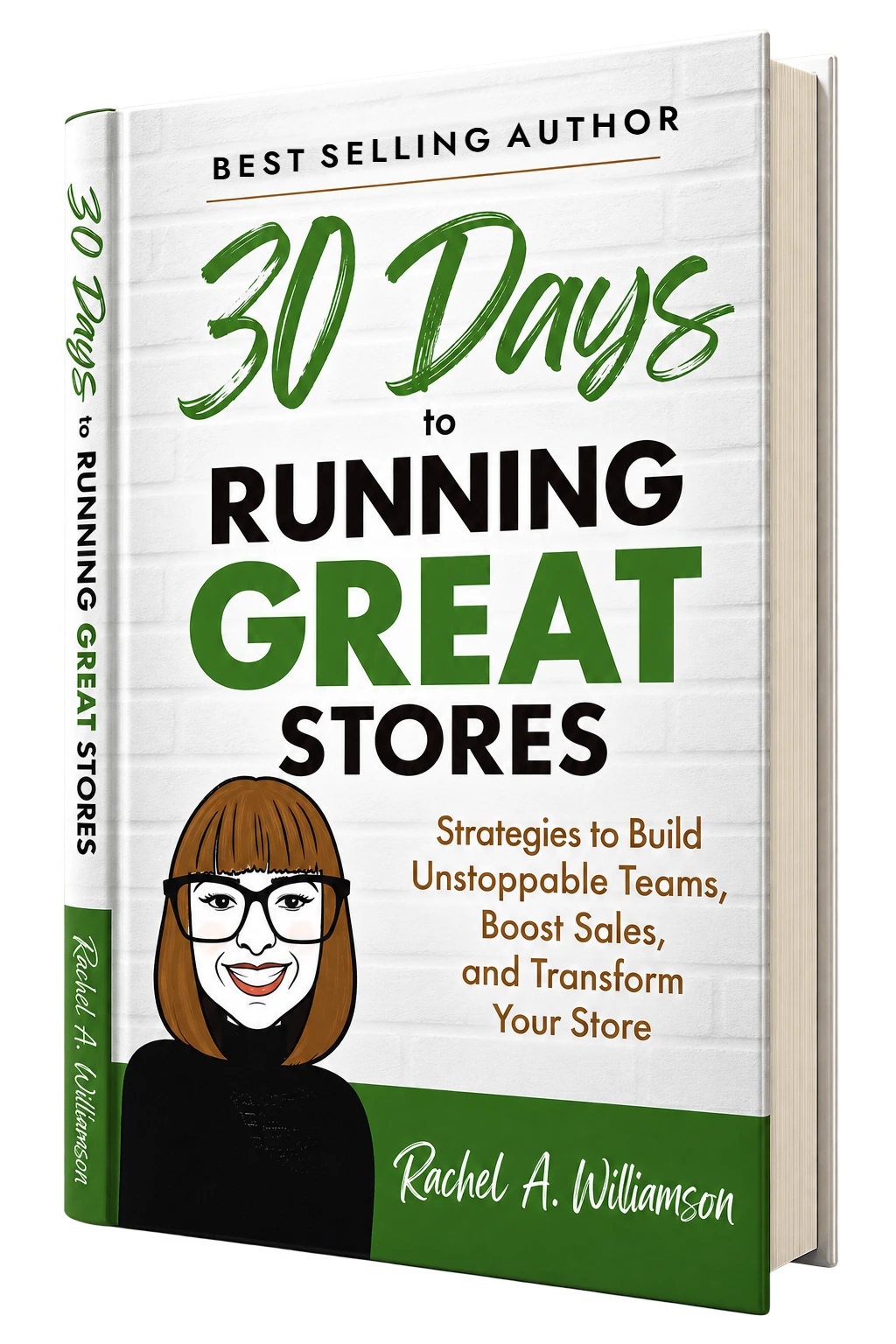
30 Days to Running Great Stores
Give leaders something they can put into practice.
A practical tool for Store Managers and district leaders that creates coaching conversations and actions inside stores.
Explore the BookCommon Questions About Retail Field Leadership
Executive Questions
Great Store Managers create clarity, lead the sales floor, coach their teams, reinforce standards, hold people accountable and build capability in others. The strongest Store Managers do not simply work harder than everyone else. They create an environment where the team can execute consistently even when the manager is not personally solving every problem.
An effective District Manager develops Store Managers rather than stepping in to do the job for them. They understand business performance across locations, identify patterns, ask strong questions, coach leaders, reinforce expectations and follow up consistently. Store visits become opportunities to strengthen leadership and execution rather than simply inspect stores.
District Managers can improve performance by helping Store Managers connect business results with store-level behaviors, identifying patterns across locations, coaching in real time, clarifying priorities and creating consistent follow-through. The goal is to build stronger Store Managers who can lead performance when the District Manager is not present.
Dependence can develop when experienced District Managers repeatedly solve problems themselves rather than coaching Store Managers to diagnose, decide and act. That may solve the immediate issue but does not necessarily build leadership capability.
Leaders translate company priorities into daily behaviors. They determine what gets emphasized, coached, recognized, corrected and followed up. Strong leaders create clarity, simplify priorities, coach behavior and reinforce expectations consistently.
Training can build knowledge and capability, but performance is also shaped by operating systems, role clarity, priorities, accountability and reinforcement. Leadership development is more likely to influence execution when the environment around the leader supports the behaviors being taught.
Build the Leaders Who Build the Stores
Stronger Stores Start With Leaders Who Know How to Create Performance Through Other People.
Your Store Managers shouldn’t have to rescue every shift. Your District Managers shouldn’t have to rescue every Store Manager. And your senior leaders shouldn’t have to push every priority all the way to the sales floor themselves.
Build the leadership capability and field operating rhythms that make stronger execution easier to repeat.
Tell us what you’re seeing across your Store Managers, District Managers and field organization. We’ll start there.